Physical Address
14 Da Souq St.
GN-947-2329, Tema.
Physical Address
14 Da Souq St.
GN-947-2329, Tema.

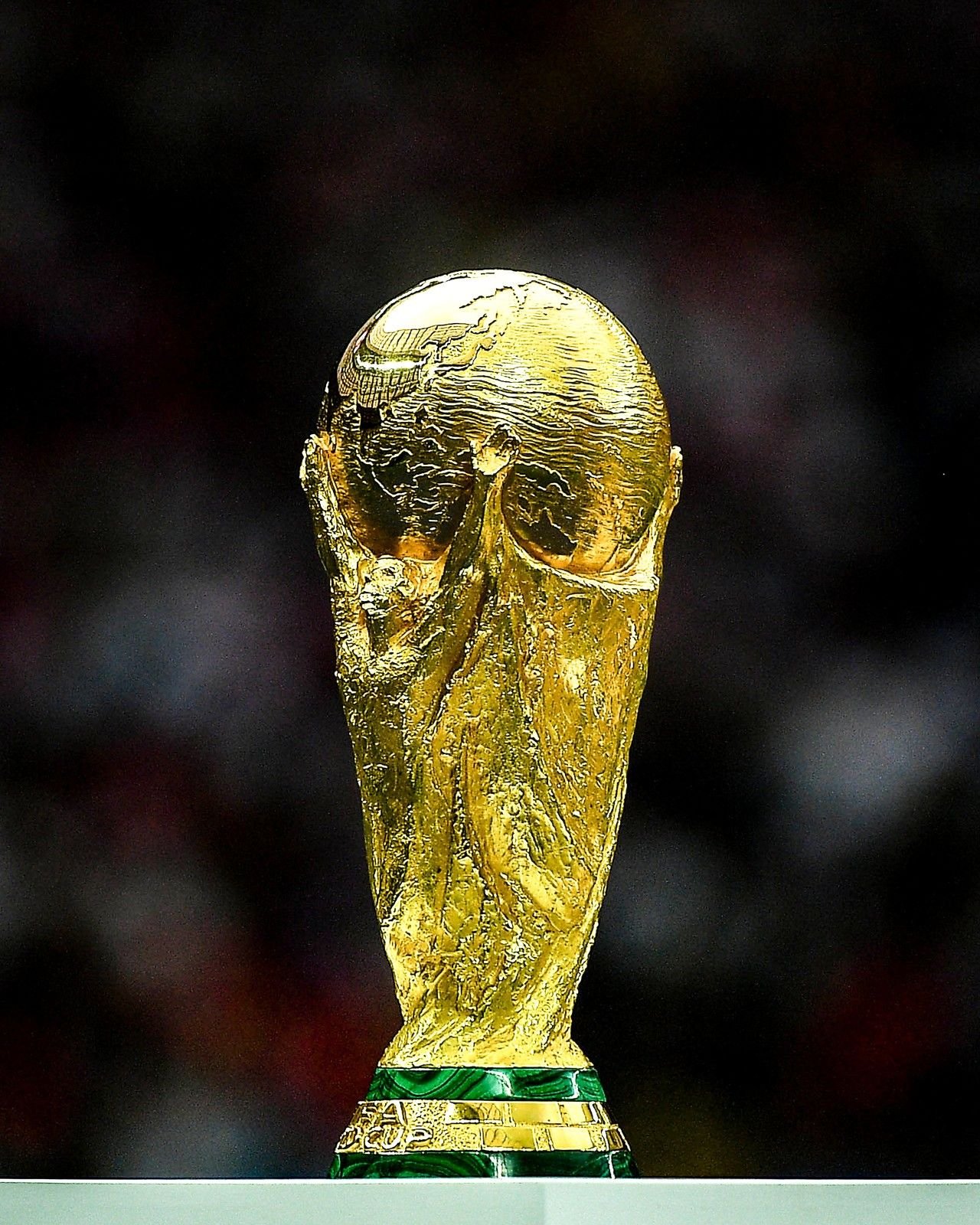
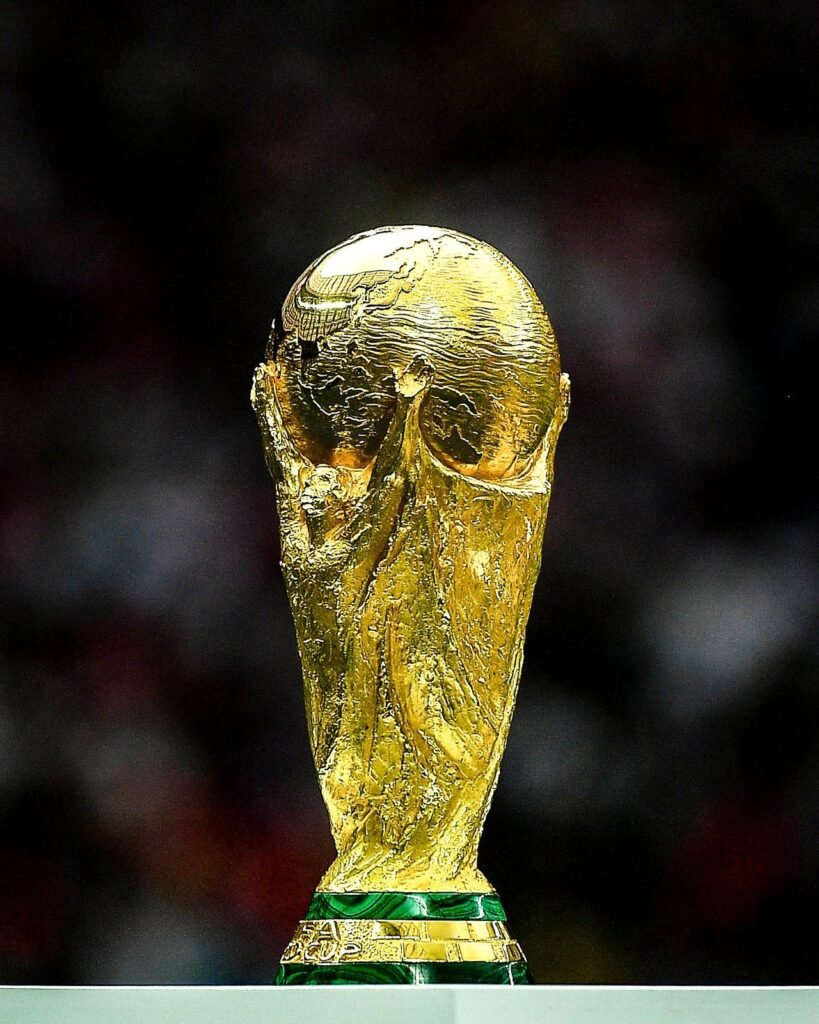
The FIFA World Cup represents football’s ultimate prize—a tournament that has evolved from a modest 13-team gathering in Uruguay to a global spectacle watched by billions. Across 22 editions spanning nearly a century, the World Cup has created legends, shattered dreams, and united nations through the beautiful game. Here’s the complete story of how football’s greatest tournament became the world’s most-watched sporting event.
The inaugural FIFA World Cup took place in Uruguay in 1930, featuring just 13 teams—seven from South America, four from Europe, and two from North America. FIFA president Jules Rimet convinced Belgium, France, Romania, and Yugoslavia to make the expensive Atlantic crossing during the Great Depression.
Uruguay, the reigning Olympic champions celebrating their centenary of independence, defeated Argentina 4-2 in the final before 93,000 fans in Montevideo. The tournament’s success convinced FIFA to make the World Cup a permanent fixture every four years.
The trophy itself was named the Jules Rimet Cup in 1946 to honor the visionary president who brought international football competition to life. This modest beginning would grow into the most prestigious prize in world sport.
Italy hosted and won the 1934 World Cup, becoming the first European nation to lift the trophy after a 2-1 extra-time victory over Czechoslovakia. The tournament introduced qualification rounds, with 16 teams competing in the finals.
Uruguay, still upset about poor European attendance at their 1930 tournament, boycotted the 1934 World Cup—the only time defending champions didn’t participate. This protest highlighted early tensions between European and South American football powers.
France hosted the 1938 edition, where Italy defended their title with a 4-2 victory over Hungary, becoming the first nation to win back-to-back World Cups. However, political tensions were rising across Europe, and football would soon take a back seat to war.
The World Cup was not held in 1942 and 1946 due to World War II, creating a painful 12-year gap between tournaments. The world had bigger concerns than football as nations fought for survival.
This interruption meant an entire generation of players never experienced World Cup glory, their careers cut short by circumstances beyond their control. When peace finally arrived, football could resume its role uniting nations.
The 1950 World Cup in Brazil became famous for the “Maracanazo”—Uruguay’s shocking 2-1 victory over hosts Brazil in the final match. This remains one of football’s greatest upsets, with roughly 200,000 spectators witnessing Brazil’s devastating defeat.
The tournament used a unique format with no knockout final, instead featuring a final group phase. Brazil needed only a draw to win their first World Cup but fell short in heartbreaking fashion at the Maracanã Stadium.
Sweden 1958 saw the emergence of 17-year-old Pelé, who announced himself with spectacular goals as Brazil won their first World Cup. His volley in the final against Sweden remains one of the tournament’s most iconic moments.
Brazil successfully defended their title in Chile 1962, establishing themselves as football’s new superpower. England finally lifted the trophy on home soil in 1966, with Geoff Hurst’s hat-trick in the final against West Germany creating immortal moments.
Mexico 1970 showcased arguably the greatest team ever assembled—Pelé’s Brazil, who demolished Italy 4-1 in the final. Carlos Alberto’s thunderous strike to complete a flowing team move epitomized jogo bonito at its finest. Brazil’s third title meant they kept the Jules Rimet trophy permanently.
The tournament expanded from 16 to 24 teams in 1982, then to 32 teams from 1998 onwards, reflecting football’s growing global reach. West Germany, Argentina, and Italy dominated this era, each claiming multiple titles.
Diego Maradona’s 1986 Mexico World Cup performance remains legendary—both the “Hand of God” controversy and the “Goal of the Century” against England in the same match defined his complicated genius. Argentina’s victory cemented Maradona’s status among football immortals.
France 1998 marked the tournament’s expansion to 32 teams and introduced a new trophy after Brazil’s permanent retention of the Jules Rimet Cup. Host nation France, led by Zinedine Zidane, claimed their first World Cup with a commanding 3-0 final victory over Brazil.
The 21st century brought unprecedented global competition. Brazil remains the only nation to have participated in every World Cup, but new powers emerged to challenge traditional dominance.
South Korea and Japan co-hosted the first Asian World Cup in 2002, won by Brazil’s Ronaldo-inspired squad. Italy claimed their fourth title in Germany 2006, while Spain’s 2010 triumph in South Africa finally delivered World Cup glory to match their European dominance.
Germany’s 2014 Brazil victory showcased tactical evolution and team cohesion, though Brazil’s 7-1 semifinal humiliation shocked the football world. France reclaimed the trophy at Russia 2018 with Kylian Mbappé’s teenage brilliance, while Qatar 2022 delivered Lionel Messi his long-awaited World Cup glory after Argentina’s penalty shootout triumph over France.
As of 2022, eight nations have won the World Cup: Brazil (5), Germany and Italy (4 each), Argentina (3), France and Uruguay (2 each), and England and Spain (1 each).
The 2026 World Cup will be jointly hosted by the United States, Canada, and Mexico—marking the first time three nations share hosting duties. This historic tournament brings revolutionary changes to football’s showcase event.
The expanded 48-team format represents the tournament’s most dramatic transformation, with 104 matches across 16 groups of three teams. The United States will host 60 matches including all fixtures from the quarterfinals onward, while Canada and Mexico each host 10 games.
The new format provides more nations their World Cup moment, particularly benefiting developing football regions. UEFA will send 16 European teams, Africa gets 9 spots (plus potential playoff berth), Asia receives 8 places, and other confederations see increased representation.
The 2030 World Cup will be hosted across six nations on three continents—Morocco, Portugal, and Spain will host most matches, while Argentina, Uruguay, and Paraguay host opening games to honor the tournament’s centenary. Uruguay hosting matches 100 years after the inaugural tournament creates perfect symmetry.
Saudi Arabia will host the 2034 World Cup, continuing the tournament’s expansion into new territories and markets. These future editions demonstrate FIFA’s commitment to making the World Cup truly global.
Tournament Size: 13 teams (1930) → 16 teams (1934-1978) → 24 teams (1982-1994) → 32 teams (1998-2022) → 48 teams (2026+)
Technology: From no television coverage to VAR technology ensuring fair play and billions watching via streaming platforms worldwide.
Professionalism: Once amateur competition to today’s multi-billion dollar tournaments featuring the world’s highest-paid athletes.
Global Reach: The 2022 World Cup engaged an estimated 5 billion people, with 1.5 billion watching the final—testament to football’s universal appeal.
Qualification Process: From invitations to a two-year qualifying campaign involving over 200 national teams competing for precious spots.
The World Cup transcends sport, creating cultural moments that define generations. Pelé’s bicycle kick, Maradona’s solo goal, Zidane’s headbutt, and countless other moments live beyond their football context.
Nations plan for years to host tournaments, building infrastructure and showcasing their culture to billions. The World Cup drives economic benefits, tourism, and national pride that extends far beyond the final whistle.
Youth participation spikes worldwide during World Cup years, inspiring the next generation of stars who dream of lifting that famous trophy. The tournament’s ability to unite divided nations, even temporarily, demonstrates sport’s unique power.
Takeaway: From Jules Rimet’s modest 1930 vision to the 48-team spectacle arriving in 2026, the FIFA World Cup’s evolution mirrors football’s transformation into the world’s most popular sport. Each tournament has added chapters to this incredible story—from Pelé’s teenage genius to Maradona’s complicated brilliance, from the Maracanazo to Messi’s redemption. As the World Cup continues expanding its global reach, one constant remains: every four years, billions unite around the beautiful game, proving that football truly is the universal language that connects our world.
Comments are closed.





[…] Read also: https://offsidetalk.com/world-cup-history/ […]