Physical Address
14 Da Souq St.
GN-947-2329, Tema.
Physical Address
14 Da Souq St.
GN-947-2329, Tema.

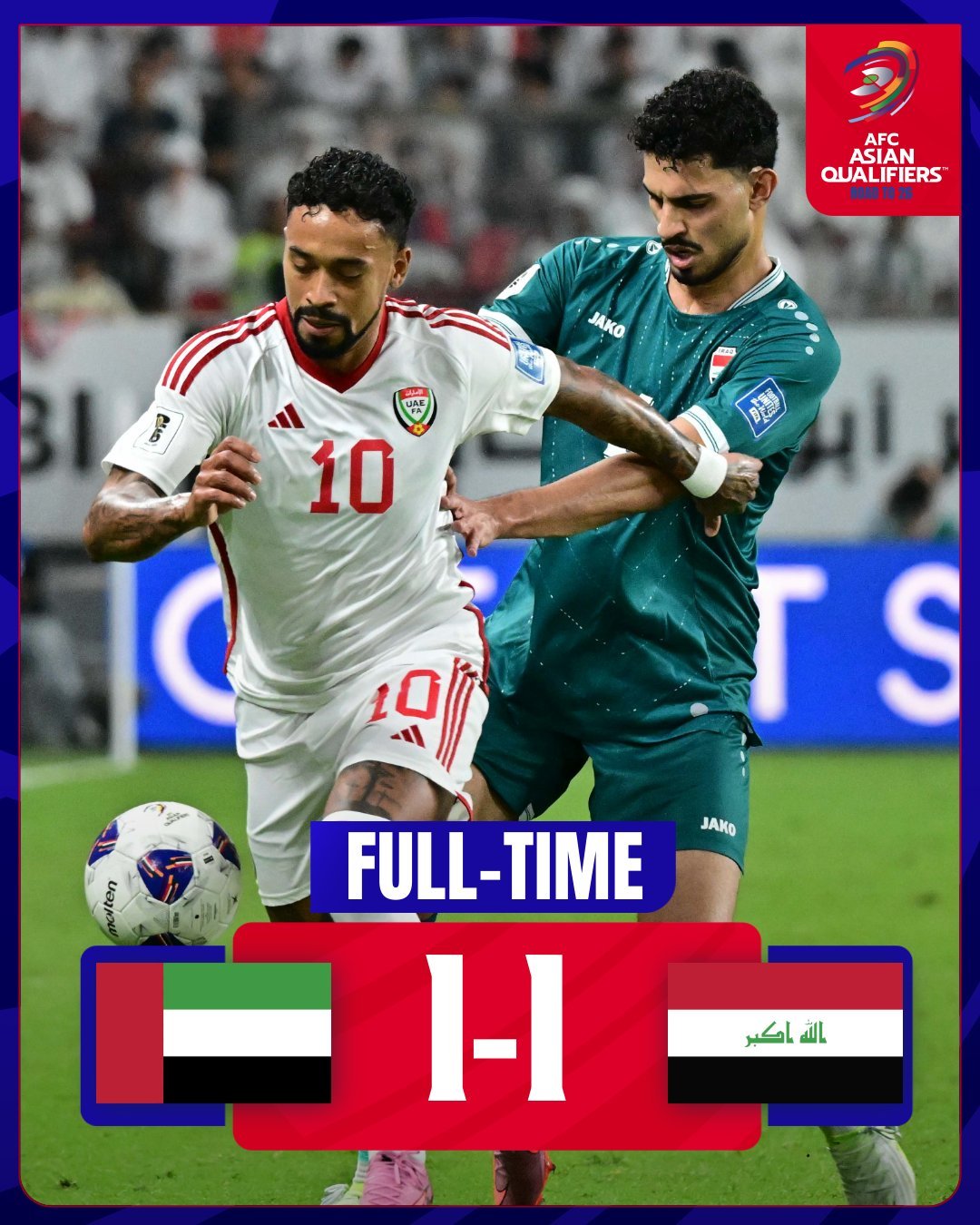
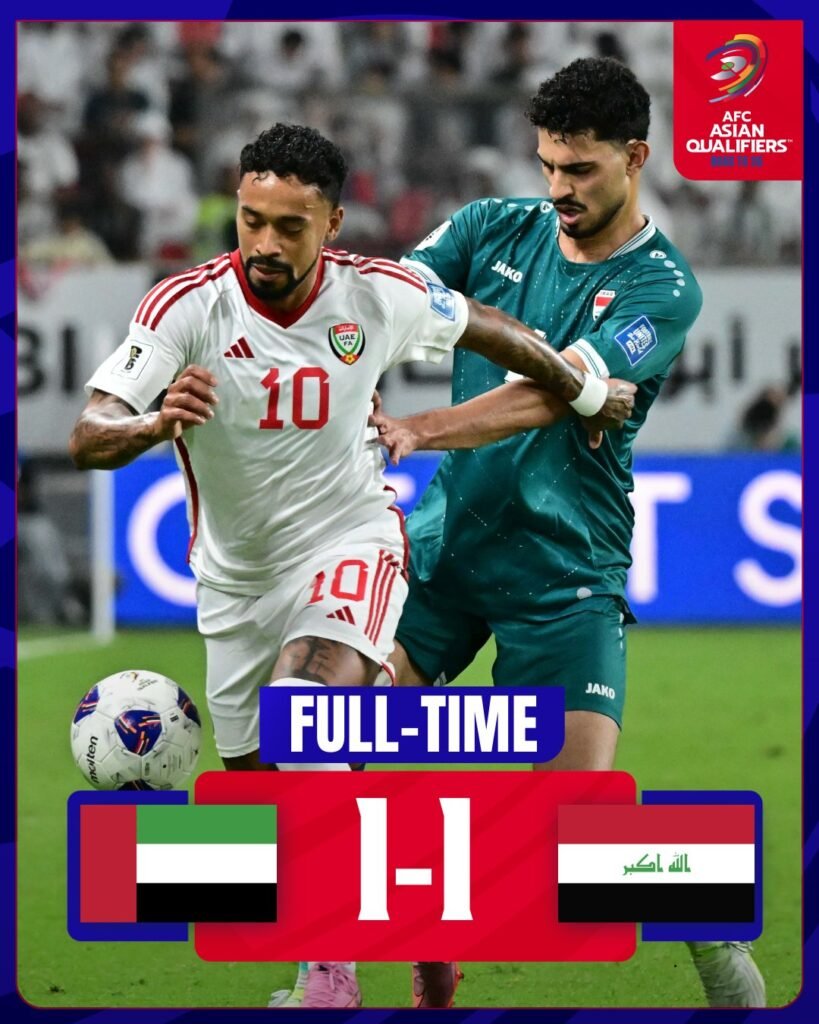
Iraq left Abu Dhabi with a precious away goal and crucial psychological advantage after holding the UAE to a 1-1 draw in Wednesday night’s World Cup playoff first leg at the Mohamed Bin Zayed Stadium. Ali Al Zubaidi’s 10th-minute opener was swiftly cancelled out by Luanzinho’s 18th-minute header, setting up a tantalizing second leg in Basra on November 18 that will determine which nation advances to March’s intercontinental playoffs.
The result leaves everything to play for in Iraq, where Graham Arnold’s Lions of Mesopotamia will back themselves to finish the job in front of their home crowd. For the UAE, the frustration of failing to capitalize on home advantage compounds their disappointment, knowing they must now travel to the cauldron of Basra needing at least a score draw to keep their World Cup dreams alive.
Iraq broke the deadlock just 10 minutes into the contest when Ali Al Zubaidi converted from close range, silencing the expectant home supporters who had filled the 44,000-capacity stadium. The goal came following a set-piece situation that exposed UAE’s defensive vulnerabilities, with Al Zubaidi showing predatory instincts to fire home when the opportunity arose.
The early strike vindicated Arnold’s tactical approach, with Iraq demonstrating the discipline and clinical edge that has characterized their qualifying campaign. The visitors’ game plan of absorbing early pressure before striking on the counter had worked to perfection, putting the UAE on the back foot from the opening exchanges.
Iraq dominated possession in the first half with 54.4% of the ball, demonstrating their confidence and tactical maturity against supposedly superior opposition. Their controlled approach frustrated UAE’s attempts to establish rhythm, with the Lions of Mesopotamia showing why they accumulated an impressive 22 points in their fourth-round qualifying group.
The UAE’s response was swift and emphatic. Just eight minutes after falling behind, Luanzinho rose majestically to power home a header from close range, assisted by Abdalla Ramadan, restoring parity and reigniting the home crowd’s hopes of a commanding first-leg advantage.
The Brazilian-born midfielder’s equalizer demonstrated UAE’s attacking quality and resilience under pressure. His positioning and timing proved impeccable, meeting Ramadan’s delivery with authority to leave Iraqi goalkeeper Jalal Hassan Hachim with no chance. The goal provided the hosts with crucial momentum heading into the halftime break.
However, despite the equalizer, Iraq continued to edge the statistical battle, registering seven total shots compared to UAE’s three, with three on target against the hosts’ one. The visitors’ aggressive approach and willingness to commit numbers forward created constant problems for UAE’s backline, even after conceding the equalizer.
The second half descended into a tense tactical battle, with both teams recognizing the importance of avoiding defeat. The pace dropped considerably as neither team wanted to give an advantage, with muscle fatigue appearing and the match losing intensity in the final stages.
UAE’s attempts to press for a winner were consistently thwarted by Iraq’s disciplined defensive organization. Arnold’s tactical setup emphasized compactness and counter-attacking threat, forcing the hosts into speculative long-range efforts that rarely troubled Hachim’s goal.
UAE made crucial substitutions, withdrawing goalscorer Luanzinho and Ramadan for Bruno and Ali Saleh to inject fresh energy and creativity. The changes provided brief moments of promise, with Ali Saleh creating a dangerous opportunity shortly after entering the fray, but clear-cut chances remained elusive.
A UAE goal from a free-kick was disallowed following a clear offside decision, silencing the home crowd’s roar and leaving fans frustrated after what seemed like a certain winner. The marginal call epitomized UAE’s evening, where fine margins prevented them from securing the commanding first-leg advantage they desperately sought.
Six minutes of added time provided one final opportunity for the hosts to snatch victory, but Iraq’s defensive resilience held firm. The Lions of Mesopotamia managed the dying stages with composure and tactical intelligence, running down the clock and protecting their precious away goal.
Iraq’s ability to defend deep and absorb sustained pressure demonstrated why they reached this playoff stage. Their physical strength and organizational discipline frustrated UAE’s increasingly desperate attempts to conjure a late winner, with the visitors showing maturity beyond their years.
Led by experienced Australian coach Graham Arnold, Iraq arrived with strong morale after a series of positive results. The former Socceroos manager, who guided Australia to the round of sixteen at the 2022 World Cup, demonstrated his tactical acumen by neutralizing UAE’s home advantage.
Arnold’s decision to set up conservatively while maintaining attacking threat paid dividends. Iraq created the better chances throughout the match, with their disciplined structure preventing UAE from establishing territorial dominance despite playing in front of their home supporters.
The coach’s ability to prepare teams for high-pressure moments was evident in Iraq’s composure under sustained second-half pressure. His experience managing in World Cup knockout situations provided invaluable guidance, with Iraq showing none of the nervousness that often afflicts teams in such crucial encounters.
For UAE manager Paulo Bento, the result represents a significant disappointment. After finishing second in their fourth-round group behind Qatar, the hosts needed a commanding first-leg performance to take control of the tie. Instead, they must now travel to Basra with the tie delicately poised.
UAE’s Khalid Eissa made crucial saves throughout the match, demonstrating why he’s considered one of Asia’s most reliable goalkeepers. However, his defensive colleagues failed to provide the protection needed, with Iraq creating numerous dangerous moments through quick transitions.
The hosts’ inability to convert home advantage into goals will haunt them heading into the second leg. Despite passionate support from the Abu Dhabi crowd, UAE lacked the clinical edge and creativity needed to break down Iraq’s organized defensive block during extended periods of possession.
The final statistics painted a picture of Iraqi control, with the visitors edging possession 54.1% to 45.9%, while both teams managed two shots on target from five and six total attempts respectively. Iraq also won the corner count 4-1, demonstrating their territorial advantage throughout the contest.
The physical nature of the encounter reflected the stakes involved, though remarkably, no yellow cards were issued during the 90 minutes plus stoppage time. The disciplined approach from both teams suggested awareness of the importance of keeping their full squads available for the decisive second leg.
Iraq’s ability to control midfield proved crucial, with their physicality and technical quality overwhelming UAE’s attempts to dominate possession. The Lions of Mesopotamia’s performance demonstrated they are serious contenders to reach the intercontinental playoffs, despite their lower FIFA ranking.
While away goals do not count in this playoff format, with extra time and potentially penalties deciding any aggregate tie, the psychological impact of Iraq’s performance cannot be understated. The visitors proved they can match UAE’s quality, and more importantly, they’ll return home knowing their destiny remains in their own hands.
Iraq’s record in the playoff stages has been impressive, and they’ll believe their stronger home support in Basra can provide the edge needed to complete the job. The Lions of Mesopotamia haven’t reached a World Cup since 1986, but this current squad possesses the quality and character to end that 40-year absence.
For UAE, the equation is simple: win or score enough goals in Basra to force extra time. The White Falcons haven’t appeared at a World Cup since Italia 1990, making this playoff their best opportunity in a generation to return to football’s biggest stage.
The return fixture in Basra on November 18 promises to be a cauldron of noise and intensity. Iraq’s home support will create an intimidating atmosphere for UAE, who must overcome both the psychological blow of failing to win at home and the challenge of performing in hostile territory.
The winner advances to the six-team intercontinental playoff tournament in March 2026, where two nations from different confederations will compete for the final two spots at the 2026 World Cup in the United States, Canada, and Mexico.
Both teams demonstrated enough quality to suggest the second leg will be equally tight and tactical. Iraq will attempt to protect their unbeaten record while seeking the goal that would force UAE to chase the game. The hosts will need to be brave, commit numbers forward, and hope their attacking quality can overcome Iraq’s defensive resilience.
The winner of this tie will join an elite group competing in the intercontinental playoffs, potentially facing opposition from CONCACAF, South America, Africa, or Oceania. The pathway to World Cup qualification remains challenging even beyond this tie, with two more matches potentially required to secure a place at the 2026 tournament.
For the losing nation, the disappointment will be immense. Both countries view World Cup qualification as a transformative national moment, with the financial rewards, international prestige, and sporting glory representing a generation-defining achievement.
The expanded 48-team World Cup format, which sees Asia secure eight automatic qualifying spots, makes missing out particularly painful. Iraq and UAE both fell agonizingly short of direct qualification, and this playoff represents their final chance to join the party.
Iraq’s Ali Al Zubaidi impressed with his early goal and constant threat throughout the match, demonstrating why he’s considered one of Asia’s most promising attacking talents. His movement caused UAE’s defense constant problems, with his physicality and technical quality proving too much to handle at times.
For UAE, Luanzinho’s equalizer saved them from potential disaster, but his overall performance highlighted the creative struggles that plagued the hosts. The midfield battle was won by Iraq, with their physical presence and technical ability overwhelming UAE’s attempts to control possession.
Defensive performances on both sides deserve credit, with center-backs from each team producing crucial interventions to preserve the draw. The tactical discipline shown by both backlines suggested extensive preparation and awareness of each other’s attacking threats.
The intercontinental playoff tournament scheduled for March 2026 will feature six nations: two from CONCACAF, and one each from AFC, CONMEBOL (Bolivia), OFC (New Caledonia), and CAF. The winner of UAE versus Iraq will represent Asia in this global qualification finale.
The format requires winning two matches to secure World Cup qualification, with the four lowest-ranked nations in FIFA’s rankings contesting semi-finals before winners advance to face the two highest-ranked teams. This additional hurdle means even reaching the intercontinental playoffs guarantees nothing.
For either UAE or Iraq, the journey to North America 2026 requires winning in Basra, then maintaining peak performance for another three months before facing global opposition. The physical, mental, and tactical demands are immense, but the reward of World Cup qualification makes the challenge worthwhile.
Takeaway: Iraq’s disciplined 1-1 draw in Abu Dhabi provides them with crucial psychological advantage heading into next week’s second leg in Basra. Graham Arnold’s tactical masterclass neutralized UAE’s home advantage, with Ali Al Zubaidi’s early goal demonstrating Iraq’s attacking quality before Luanzinho’s swift equalizer salvaged UAE’s hopes. The tie remains perfectly poised, with everything to play for in front of Iraq’s passionate home support. One team will advance to March’s intercontinental playoffs with World Cup qualification tantalizingly within reach, while the other faces the heartbreak of watching from home as the 2026 tournament unfolds across North America.