Physical Address
14 Da Souq St.
GN-947-2329, Tema.
Physical Address
14 Da Souq St.
GN-947-2329, Tema.


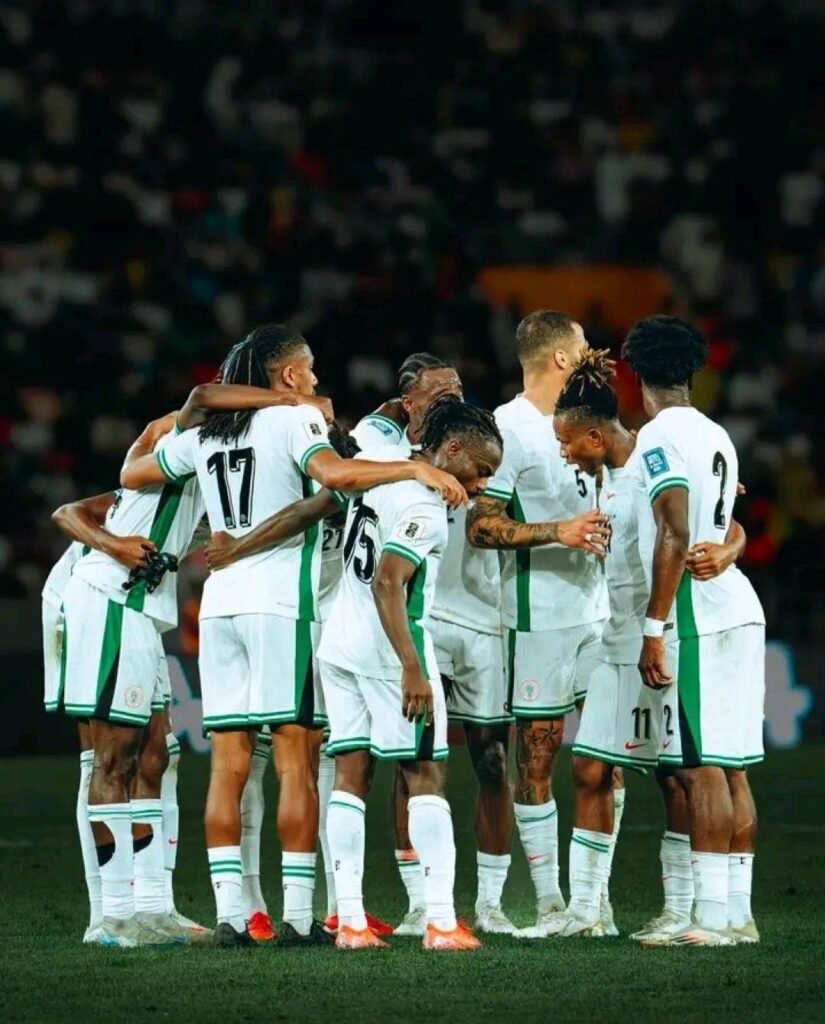
In a cruel twist that will haunt Nigerian football for years, the Super Eagles’ dreams of returning to the World Cup stage shattered in the most heartbreaking fashion. Beaten 4-3 on penalties by DR Congo in the African play-off final at the Prince Moulay Abdellah Stadium, Nigeria’s qualification campaign—a rollercoaster of draws, drama, and defiance—ended in bitter elimination. For the second consecutive tournament, Africa’s most populous nation, with its galaxy of Premier League stars, will watch the 2026 FIFA World Cup from afar. This isn’t just a loss; it’s a national reckoning.
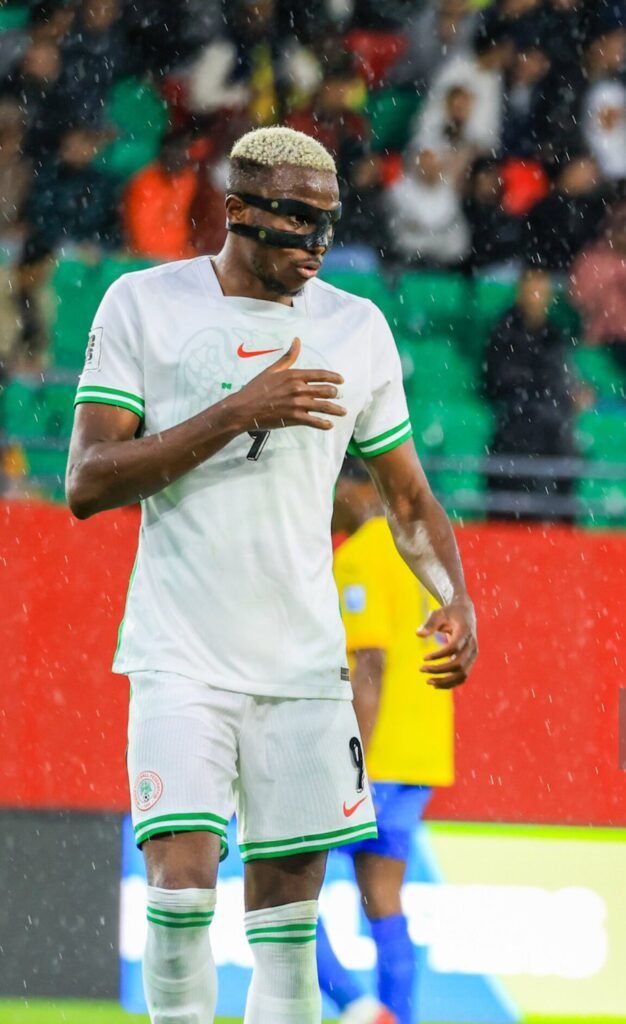
The match itself was a cagey affair, emblematic of Nigeria’s qualifying woes: plenty of promise, but no killer punch. After a goalless 90 minutes, where Victor Osimhen squandered a golden chance late on and DR Congo’s Cedric Bakambu rattled the crossbar, the game exploded into extra time. Chidera Ejuke’s curling strike in the 95th minute gave Nigeria hope, only for Yoane Wissa to level for the Leopards moments later. Osimhen, the talismanic Napoli forward who’s netted eight goals in six qualifiers this campaign, thought he’d won it in the 118th minute with a poacher’s finish—but VAR ruled it out for offside. Penalties it was, and Stanley Nwabali’s save couldn’t stem the tide as DR Congo’s David Mboli converted the decisive spot-kick.
“It’s devastating,” said a shell-shocked Osimhen post-match, his voice cracking as he addressed Sky Sports cameras. “We gave everything, but football is cruel. This team deserved better.” His eight goals across the qualifiers—culminating in a hat-trick in the 4-0 rout of Benin that sealed a play-off spot—weren’t enough to overcome the ghosts of a campaign marred by too many stalemates.
Nigeria’s path to this point was a saga of self-inflicted wounds and narrow escapes. Under new coach Eric Chelle—the first non-Nigerian African to helm the Eagles since January—the Super Eagles started sluggishly in Group C, winless in their first four matches: three draws and a shock 2-1 loss to Benin. South Africa, despite a FIFA three-point deduction for fielding an ineligible player against Lesotho, pulled ahead relentlessly.
The turnaround came in fits and starts. Osimhen’s brace in a morale-boosting 2-0 win over Rwanda in March marked Nigeria’s first victory since November 2021. A gritty 2-1 escape against Lesotho followed, but draws against Zimbabwe (1-1) and South Africa (1-1) piled on the pressure. By October, with the group phase down to its final matchday, Nigeria sat third on 14 points, behind Benin (17) and Bafana Bafana (15). An emergency plane landing in Angola en route from South Africa only added to the chaos.
Miraculously, they clawed back: a 1-0 grind past Rwanda revived hopes, and then the miracle in Uyo. Osimhen’s hat-trick and Frank Onyeka’s 91st-minute volley in a 4-0 demolition of Benin secured second place on 17 points—just one behind South Africa, who edged Rwanda 3-0 for automatic qualification. On goal difference, Nigeria sneaked into the CAF play-offs as one of four best runners-up (ahead of Burkina Faso), joining Cameroon, Gabon, and DR Congo in Morocco for a mini-tournament where only one spot remained for the inter-confederation playoffs.
Chelle’s unbeaten run—he’d lost just once since taking over—carried them through the semis. Against Gabon, it was extra-time heroics again: Akor Adams’ opener canceled by Mario Lemina’s late equalizer, before Ejuke and Osimhen’s double sealed a 4-1 win. “We’re warriors,” Chelle had declared afterward. But against DR Congo, the magic ran dry. Players boycotted training over unpaid bonuses just days before the semis, highlighting the off-field turmoil that’s plagued the Nigeria Football Federation (NFF) for years—corruption allegations, mismanagement, and wage disputes.
This marks Nigeria’s second straight World Cup absence, a far cry from their golden era. The Super Eagles qualified for six straight tournaments from 1994 to 2014, reaching the Round of 16 five times and earning three African Cup of Nations titles. Stars like Jay-Jay Okocha, Nwankwo Kanu, and John Obi Mikel defined that swagger. Yet, since missing Qatar 2022—their first absence in 16 years—the decline has been stark. Too many draws (five in Group C alone), defensive fragility, and a reliance on Osimhen’s brilliance masked deeper issues.
DR Congo, ranked 41st to Nigeria’s 36th, now advances to the March 2026 FIFA play-offs—a six-team showdown for the final two spots. As one of the seeded teams (by FIFA ranking), they’ll skip semis and go straight to the final, facing potential foes like New Caledonia or Bolivia. For the Leopards, it’s a historic shot at their first World Cup since 1974.
Back home, the fallout will be seismic. Social media erupted in despair: “When it comes to failure, Naija no dey carry last,” tweeted one fan, while others lamented, “No World Cup 2026 for the Super Eagles.” The NFF faces calls for overhaul—Chukwueze and Semi Ajayi had urged unity pre-play-offs, but internal strife proved fatal. Chelle, credited with reviving a “faltering campaign,” may survive, but questions linger: Is the talent pool—Lookman, Iwobi, —being squandered? Can the federation end the cycle of excuses?
Nigeria arrived in Rabat as favorites, burdened by expectation from 238 million fans. They leave empty-handed, their samba silenced by spot-kick cruelty. This isn’t the end of the Super Eagles—far from it. With Osimhen at 26 and a youth pipeline bubbling (think Arokodare’s winner over Rwanda), redemption awaits at the 2027 Africa Cup of Nations or 2030 qualifiers. But for now, the pain is raw. Africa’s sleeping giant can’t afford another long sleep.