Physical Address
14 Da Souq St.
GN-947-2329, Tema.
Physical Address
14 Da Souq St.
GN-947-2329, Tema.

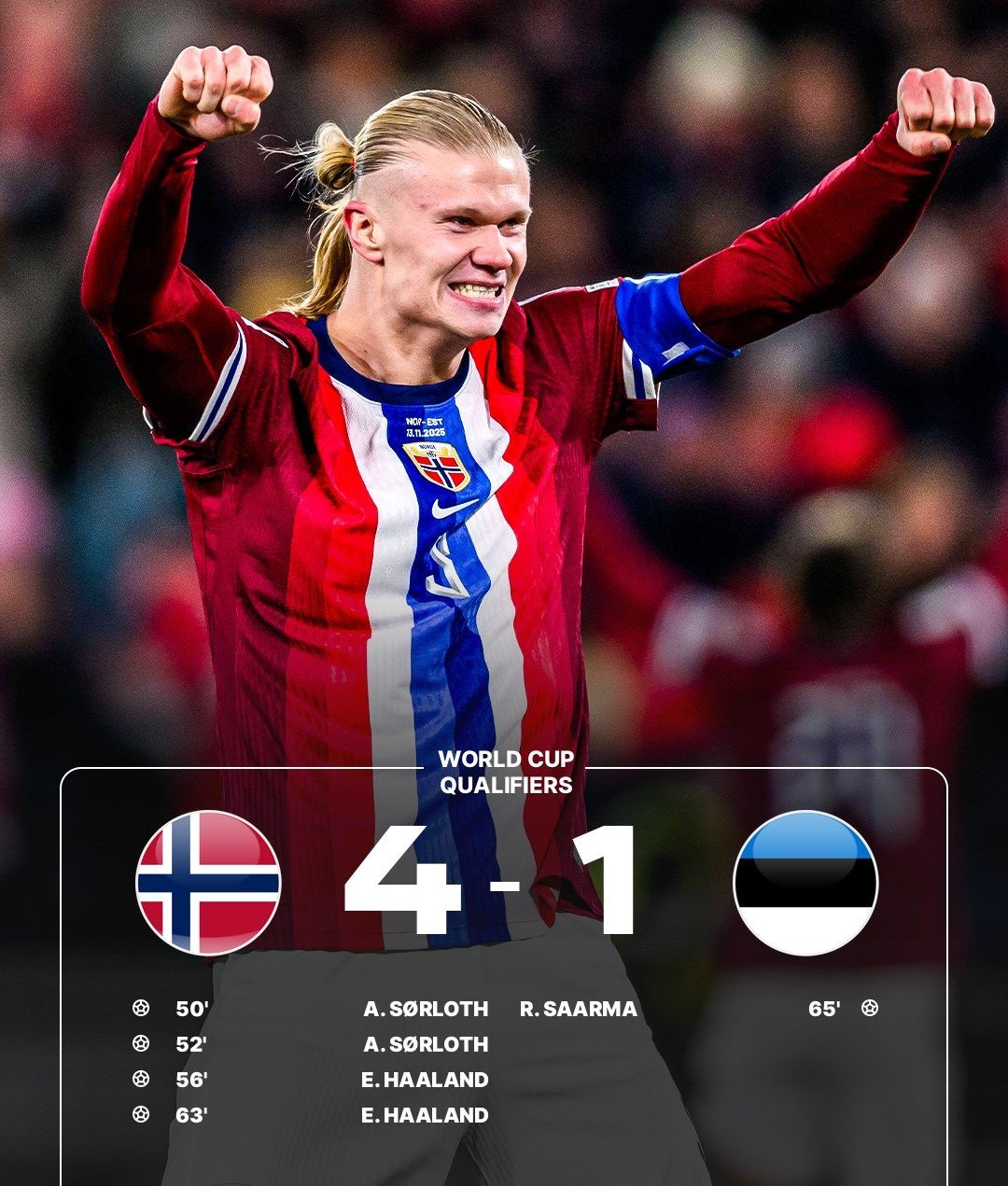
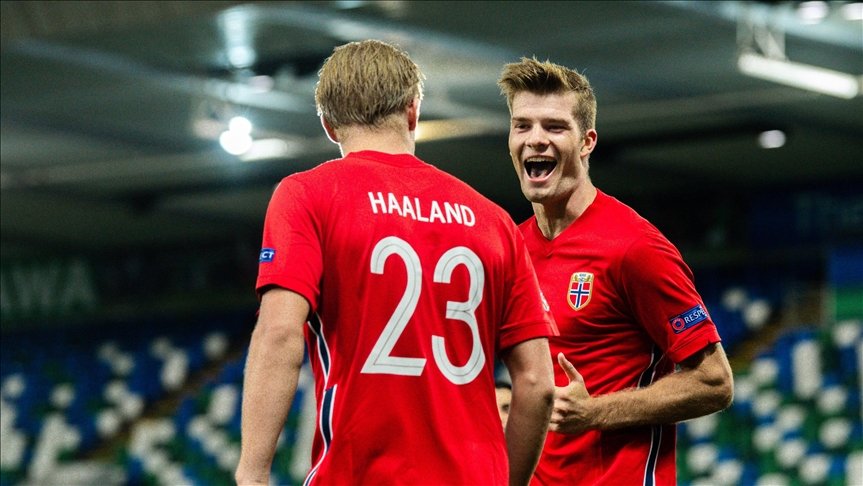
Norway maintain perfect World Cup qualifying record with commanding performance against Estonia at Ullevaal Stadium as Erling Haaland leads dominant display.
Norway continued their relentless march toward a first World Cup appearance since 1998 with a commanding performance against Estonia at Ullevaal Stadium in Oslo on Wednesday, November 13, 2025. Ståle Solbakken’s side maintained their perfect qualifying record in Group I, dominating possession and creating numerous chances against overmatched opponents desperate for their first meaningful result of the campaign.
The match represented another step toward redemption for Norwegian football, which has endured a 27-year World Cup drought and hasn’t featured at any major tournament since Euro 2000. With superstar striker Erling Haaland leading the charge and Italy breathing down their necks despite having games in hand, Norway needed to maintain momentum heading into their decisive final group match against the Azzurri.
Norway entered Wednesday’s encounter with an unblemished record of six wins from six matches, establishing themselves as Group I’s dominant force. Their attacking prowess has been remarkable, scoring 29 goals while conceding just three across their qualifying campaign, creating a goal difference of +26 that provides crucial cushioning in the race for automatic qualification.
The Norwegians have demonstrated tactical maturity and clinical finishing throughout the qualification process. Their 11-1 demolition of Moldova and 5-0 thrashing of Israel showcased their attacking potential, while victories over Italy (3-0) and Finland (1-0) proved they could grind out results against quality opposition.
Solbakken’s squad features a perfect blend of Premier League quality and domestic talent. Manchester City’s Erling Haaland leads the line, supported by Arsenal’s Martin Ødegaard in midfield and a solid defensive core anchored by Bournemouth’s Julian Ryerson and Brentford’s Kristoffer Ajer.
Estonia arrived in Oslo bottom of Group I with just four points from seven matches, their only victory coming against Moldova. The visitors knew they were playing for pride rather than qualification, but Jurgen Henn’s side hoped to frustrate Norway and possibly secure a morale-boosting result.
Erling Haaland entered the match as European qualifying’s top scorer with 18 goals, demonstrating the clinical finishing that has made him one of world football’s most feared strikers. The Manchester City forward has scored in nine consecutive international appearances, a remarkable streak that underlines his importance to Norway’s World Cup ambitions.
The 25-year-old’s international record of 51 goals in 46 appearances represents a scoring rate that surpasses even legendary figures like Cristiano Ronaldo and Lionel Messi at similar stages of their careers. His six hat-tricks for Norway place him just four behind the joint record held by Ronaldo and Messi, suggesting he’ll eventually surpass that milestone.
Haaland’s form for both club and country has been extraordinary. His ability to score different types of goals – powerful strikes, delicate finishes, and towering headers – makes him virtually impossible to defend against. Estonia’s defensive strategy centered entirely on containing the Manchester City star, but neutralizing such quality remains an almost impossible task.
The striker’s partnership with Martin Ødegaard continues to flourish, with the Arsenal captain’s creative vision providing perfect service for Haaland’s intelligent movement. Their club-level understanding translates seamlessly to international football, creating a devastating attacking combination that has terrorized European defenses.

Norway controlled proceedings from the opening whistle, enjoying 79.2% possession in the early stages and pinning Estonia deep inside their own half. Solbakken’s 4-4-2 formation provided width through wingers Antonio Nusa and Oscar Bobb, while Sander Berge and Patrick Berg controlled midfield tempo with their passing range and defensive coverage.
The hosts’ patient build-up play gradually wore down Estonia’s defensive resistance. Norway recorded 19 shot attempts compared to Estonia’s seven in their previous June encounter, demonstrating their territorial dominance and attacking intent. Their ability to create chances through multiple avenues – crosses, through balls, and individual skill – kept Estonia’s defense constantly scrambling.
Estonia deployed a defensive 4-4-1-1 formation designed to absorb pressure and hit on the counter-attack. However, their limited attacking quality and Norway’s defensive organization meant clear-cut chances remained scarce for the visitors. Goalkeeper Karl Hein faced constant bombardment, with his shot-stopping ability preventing an even more lopsided scoreline.
Norway’s tactical discipline impressed throughout, with players maintaining their positions and executing the game plan with precision. The hosts’ pressing intensity forced Estonia into repeated errors, with turnovers in dangerous areas creating numerous scoring opportunities.
Estonia entered the match having conceded 2.1 goals per game on average during qualifying, a statistic that highlighted their defensive struggles against quality opposition. Facing Norway’s relentless attacking force represented their toughest test yet, with the hosts boasting the firepower to exploit any defensive lapses.
Jurgen Henn organized his defense with center-backs Maksim Paskotši and Karol Mets tasked with containing Haaland, while full-backs Michael Schjønning-Larsen and Vlasiy Sinyavskiy attempted to prevent crosses from reaching the penalty area. However, Norway’s movement and technical quality created constant problems.
Estonia’s strategy of sitting deep and defending in numbers provided brief moments of solidity, but sustaining such defensive intensity for 90 minutes against elite opposition proved impossible. Their lack of attacking outlets meant constant pressure on their defense, with no respite from Norway’s waves of attacks.
The visitors showed commendable fighting spirit despite facing overwhelming odds. Players threw their bodies on the line to block shots and make crucial tackles, demonstrating professional pride even when qualification hopes had long since evaporated. However, class eventually told as Norway’s quality shone through.
Norway lead Group I with 21 points from seven games, establishing a commanding position ahead of their final group match against Italy. The Azzurri sit second with 15 points from six matches, meaning they have games in hand but need Norway to slip up to claim the automatic qualification spot.
Italy’s 3-1 victory over Estonia in October kept them within touching distance, but Norway’s superior goal difference provides additional security. Even if Italy win their remaining matches, Norway only need a draw against the Azzurri in their final group encounter to secure automatic World Cup qualification.
The stakes couldn’t be higher for the November 16 showdown in Rome. Italy, seeking to reach their first World Cup since 2014 after missing the 2018 and 2022 tournaments, will throw everything at Norway in what promises to be a tactical masterclass between two of Europe’s most organized teams.
Third-placed Israel remain in contention for the playoff spot with 12 points from seven matches, while Finland languish in fifth with six points. Estonia’s campaign has been disappointing, managing just four points from their seven matches, leaving them firmly rooted at the bottom of the standings.
Norway’s absence from major tournaments since Euro 2000 represents one of international football’s more surprising droughts. A nation that once competed at three World Cups in the 1990s, producing talents like Ole Gunnar Solskjær, Tore André Flo, and John Arne Riise, has endured frustrating near-misses and failed campaigns.
The current generation, led by Haaland and Ødegaard, carries the hopes of an entire nation desperate to see their team compete on football’s biggest stage. The expanded 48-team World Cup format provides additional opportunities, but Norway’s players understand the pressure and expectations surrounding their qualification campaign.
Norwegian fans have suffered through heartbreaking playoff defeats and qualification failures that seemed impossible given the talent available. The 2021 qualification campaign ended in disappointment despite impressive performances, making this current run even more significant for players and supporters alike.
Success in these qualifiers would represent redemption not just for current players but for an entire generation of Norwegian football. The nation’s passionate supporters have watched enviously as smaller nations like Iceland and Northern Ireland reached major tournaments while Norway remained on the outside looking in.
The 2026 FIFA World Cup, jointly hosted by the United States, Canada, and Mexico, represents Norway’s best opportunity in a generation to return to football’s grandest stage. The expanded tournament format means more European teams will qualify, but automatic qualification remains the preferred route to avoid playoff uncertainty.
Group winners advance directly to the World Cup, while runners-up enter a playoff system involving the remaining European teams. Norway’s commanding position means they control their destiny heading into the Italy match, with a draw sufficient to secure the group victory and automatic qualification.
The prospect of seeing Haaland compete at a World Cup excites football fans globally. The Manchester City striker represents one of the sport’s generational talents, and his absence from previous major tournaments has deprived neutral fans of witnessing his brilliance on football’s biggest stage.
For Norway, qualification would trigger national celebrations and validate years of development work within Norwegian football. The impact extends beyond sporting achievement, potentially inspiring a new generation of players and rejuvenating interest in the domestic game.

Norway’s attention now turns to their November 16 clash with Italy in Rome, a match that will determine automatic World Cup qualification. Solbakken’s side travels to Italy knowing a draw guarantees their place at the 2026 tournament, though they’ll want to secure victory and stamp their authority on the group.
The Italy match represents a fascinating tactical battle between two of Europe’s most organized teams. Luciano Spalletti’s Azzurri will attack relentlessly at home, creating an open, end-to-end encounter that should provide thrilling entertainment for neutral observers.
Estonia concludes their disappointing campaign against Moldova, seeking to end on a positive note despite their struggles throughout qualifying. Henn will use the final match to experiment with younger players and begin building toward future qualification campaigns.
Takeaway: Norway’s dominant performance against Estonia maintained their perfect World Cup qualifying record and moved them within touching distance of their first tournament appearance since 1998. Erling Haaland’s continued scoring form and the team’s tactical discipline under Ståle Solbakken suggest this talented generation is finally ready to end Norway’s major tournament drought. With a date against Italy looming on November 16, Norwegian football stands on the brink of redemption. A draw in Rome secures automatic qualification for the 2026 World Cup, potentially triggering national celebrations and validating years of patient development. For a nation starved of major tournament football for over two decades, these are truly special times.