Physical Address
14 Da Souq St.
GN-947-2329, Tema.
Physical Address
14 Da Souq St.
GN-947-2329, Tema.

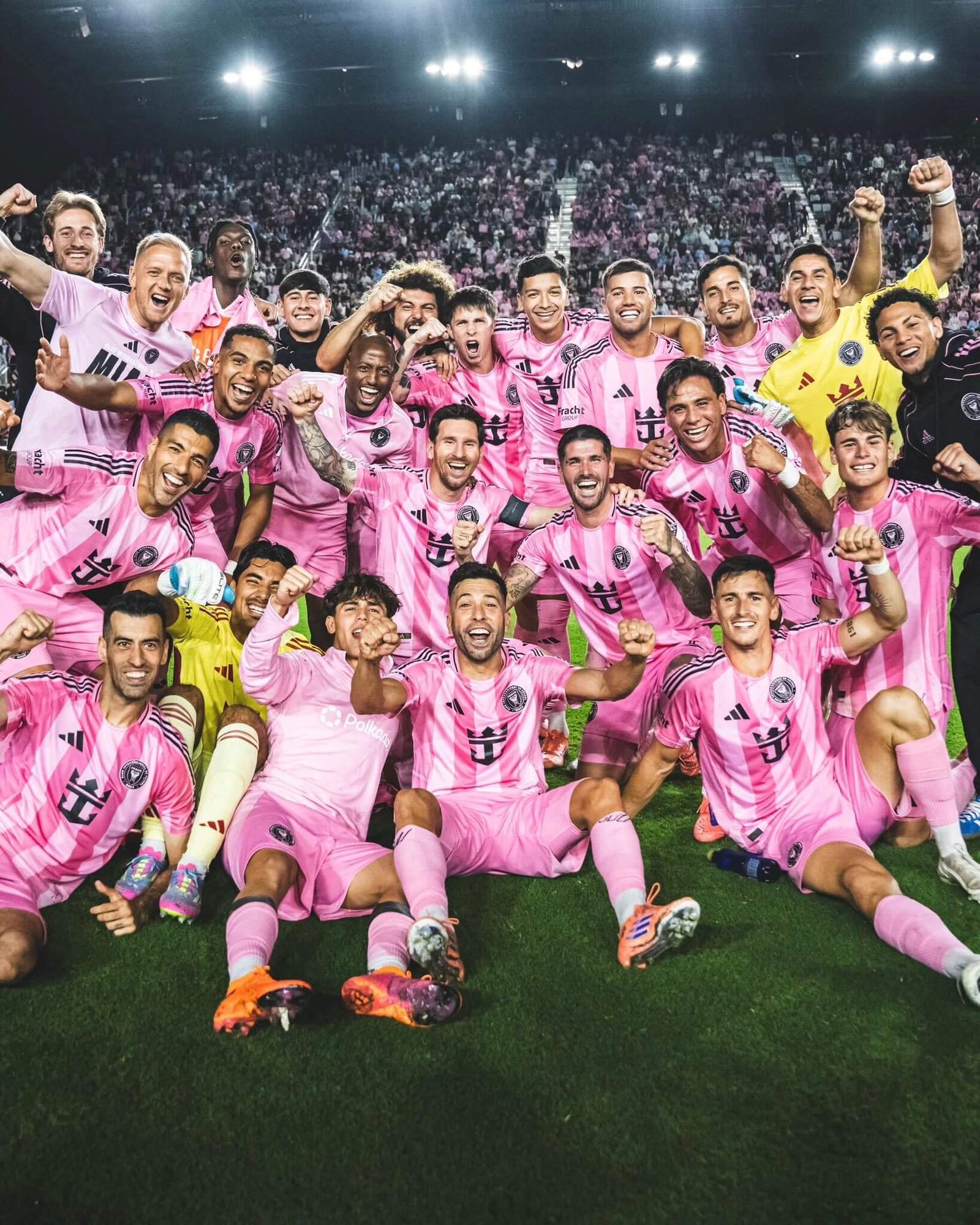
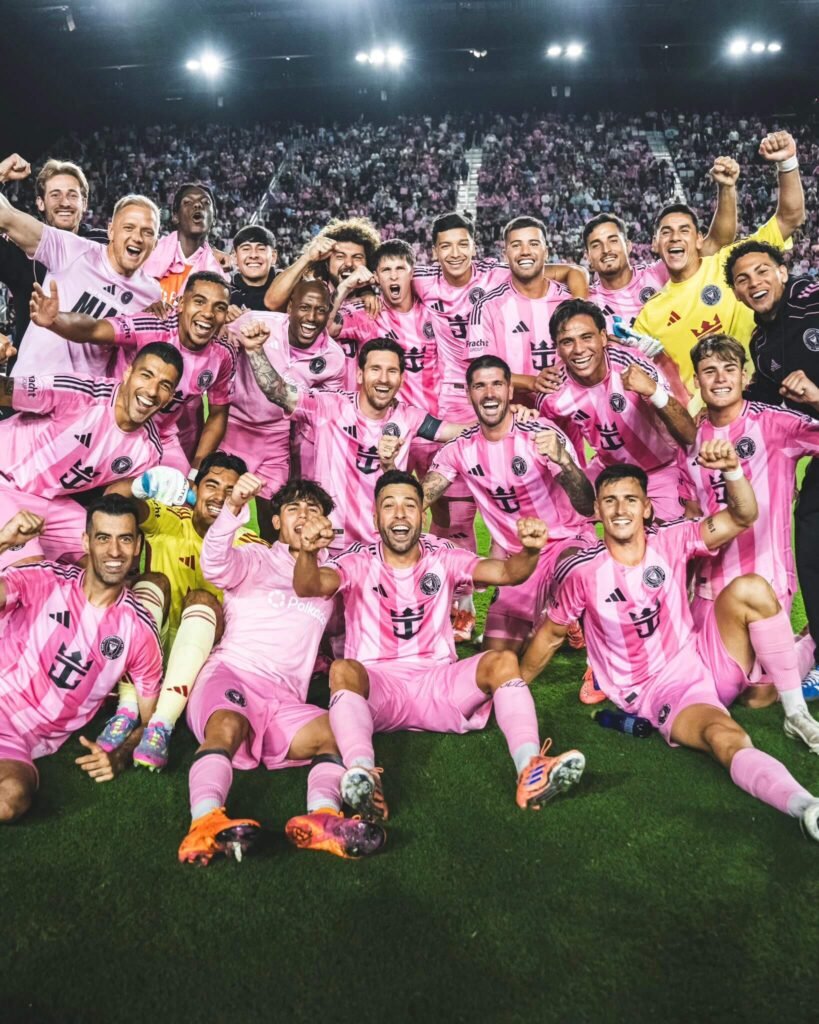
CHAMPIONS AT LAST. Inter Miami captured their first-ever MLS Cup title on Saturday evening, beating the Vancouver Whitecaps 3-1 in front of a raucous home crowd at Chase Stadium in Fort Lauderdale. Lionel Messi delivered the decisive moment in the 71st minute, stripping Andreas Cubas of possession before threading a perfect assist to Rodrigo De Paul, who finished clinically to restore Miami’s lead. Tadeo Allende sealed the victory late in stoppage time, capping a historic night that saw the five-year-old franchise claim MLS’s ultimate prize in just their second playoff appearance.
The victory completes an extraordinary turnaround for a club that finished rock-bottom of the entire league just two years ago. Under first-year head coach Javier Mascherano—himself a former teammate of Messi’s with Argentina and Barcelona—Inter Miami have transformed into an unstoppable force, scoring 98 combined regular season and playoff goals in 2025, the most in a single MLS season in history. For Vancouver, playing in their first-ever MLS Cup final, it was heartbreak despite Ali Ahmed’s second-half equalizer temporarily silencing the home crowd and Thomas Müller’s inspired performance.
The match exploded into life in just the eighth minute when Miami took the lead through the most fortuitous of circumstances. Tadeo Allende burst down the left flank and delivered a dangerous low cross toward the six-yard box. Vancouver defender Edier Ocampo, under pressure from Messi’s darting run, attempted to clear but only succeeded in deflecting the ball past his own goalkeeper Yohei Takaoka.
Chase Stadium erupted. The home crowd of over 20,000 sensed their team was destined for glory from that moment. Ocampo collapsed to the turf in anguish, knowing his mistake had gifted Miami the perfect start to their quest for MLS immortality.
Vancouver, shell-shocked by the early setback, needed time to regroup. Head coach Jesper Sørensen—himself managing his first MLS Cup final in his debut season—urged his players to stay calm and stick to the game plan. The Whitecaps had proven throughout the playoffs that they could bounce back from adversity, having survived penalty shootouts against FC Dallas and LAFC en route to the final.
Vancouver gradually found their rhythm as the first half progressed. Thomas Müller, the 39-year-old German legend who joined the Whitecaps midseason and immediately elevated everyone around him, began orchestrating attacks with his trademark intelligence and movement.
The Whitecaps dominated possession in extended stretches, pinning Miami back into their own half. Emmanuel Sabbi had the best chance of the opening 45 minutes, hitting the post after Müller cleverly nodded a corner into his path. Rocco Rios Novo, Miami’s goalkeeper, was forced into several important saves as Vancouver pressed for an equalizer.
Brian White, who had scored twice in Vancouver’s 3-1 semifinal victory over San Diego FC, continually tested Miami’s defense with his physical presence. Sebastian Berhalter—son of former USMNT coach Gregg Berhalter and a key cog in Vancouver’s midfield—controlled the tempo alongside Cubas, trying to unlock Miami’s compact defensive shape.
But Miami held firm through halftime, going into the break with their 1-0 lead intact. The single-goal advantage felt precarious given Vancouver’s growing momentum, and Mascherano surely emphasized the need for a strong start to the second half.
The second half saw Vancouver come out with renewed intensity. They dominated possession completely in the opening 10 minutes, registering an astonishing 86 percent of the ball as they camped in Miami’s half searching for the equalizer.
It finally arrived in the 60th minute through a moment of sublime quality. Brian White received possession near the top of the box and, with defenders closing in, played a perfectly weighted pass to Ali Ahmed making a darting run into the penalty area. The Canadian forward took one touch to control before firing past Rios Novo into the bottom corner.
The atmosphere inside Chase Stadium changed instantly. The section hosting Vancouver’s traveling supporters—known as the Southsiders—erupted into a frenzy of celebration. They sang “Olé, olé, olé” and “Let’s go, Whitecaps,” their voices echoing across the stadium and drowning out the stunned home crowd.
Vancouver now believed. They had weathered Miami’s early storm, found their equalizer, and were playing with confidence and purpose. For several minutes after the goal, it appeared the Whitecaps might complete the comeback and take the lead.
Emmanuel Sabbi nearly did exactly that just two minutes after Ahmed’s goal. He latched onto another Müller assist and unleashed a shot from inside the box that struck both posts before ricocheting away to safety. It was an agonizing near-miss that would haunt Vancouver in the aftermath.
The decisive moment arrived in the 71st minute, and it came from pure individual brilliance combined with a catastrophic defensive error. Andreas Cubas, Vancouver’s defensive midfielder who had been solid throughout the playoffs, inexplicably lost control of the ball near the halfway line.
Messi pounced like a predator sensing weakness. The Argentine maestro—who had been relatively quiet by his standards—simply walked up and stripped the ball from Cubas’ feet. With Vancouver’s defense scrambling to recover, Messi surveyed his options and spotted De Paul making an intelligent run toward the penalty area.
The pass was inch-perfect, threaded between two defenders and weighted exactly right for De Paul’s stride. The former Atlético Madrid midfielder, who has been one of Miami’s unsung heroes this season, took one touch to control before lashing his shot past Takaoka. The goalkeeper had no chance as the ball flew into the net, restoring Miami’s lead with just 19 minutes remaining.
The Argentine connection had delivered in the biggest moment. Messi jumped into De Paul’s arms as teammates mobbed them both, the home crowd roaring their approval. For Vancouver, the goal was devastating—they had dominated large stretches of the match but were now behind again due to one defensive mistake.
Cubas will not want to relive that moment. In a match defined by fine margins, his loss of possession proved the difference between Vancouver’s fairy tale and Miami’s coronation.
Vancouver threw everything forward in the final 15 minutes, desperate to find another equalizer. Sørensen made attacking substitutions, bringing on Ryan Gauld for Ahmed and Joedrick Pupe for Ralph Priso-Mbongue. The Whitecaps committed more players forward, accepting the risk of being caught on the counter-attack.
Miami, meanwhile, tried to manage the game. Mascherano brought on defensive midfielder Yannick Bright for Mateo Silvetti, signaling his intent to protect the lead and see out the victory. The tactical chess match intensified as both managers used all their remaining substitutes.
Yellow cards flew as tackles became more aggressive. De Paul and Mathias Laborda were both cautioned for hard fouls. The tension was palpable—one goal either way would dramatically alter the complexion of the match.
The fourth official signaled seven minutes of stoppage time, giving Vancouver one final chance to salvage their season. They pressed forward with everything they had, winning corners and launching long balls into Miami’s penalty area.
But Miami sealed the victory in the fifth minute of added time through another Messi assist. The Argentine picked up possession and delivered a perfectly weighted through ball to Tadeo Allende, who had space to run into behind Vancouver’s stretched defense. Allende took one touch before hammering his finish past Takaoka to make it 3-1.
The goal sparked wild celebrations on Miami’s bench. Allende had been exceptional throughout the playoffs, tying the MLS record with eight goals in a single postseason including a hat-trick in the 5-1 demolition of NYCFC. His late strike was the icing on the cake for Miami’s historic season.
Sebastian Berhalter picked up a yellow card for a frustrated foul on Allende in the dying seconds, but it was too late. The referee blew the final whistle moments later, sparking pandemonium at Chase Stadium.
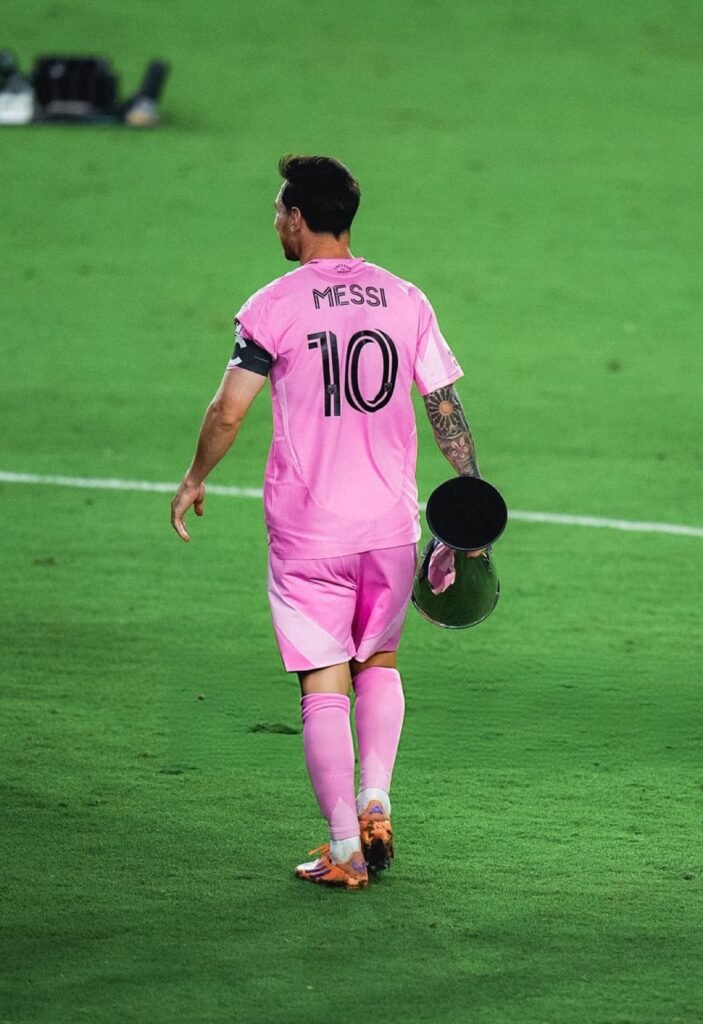
This MLS Cup victory caps an extraordinary individual season for Lionel Messi. The 38-year-old won the Golden Boot with 29 goals and added 19 assists in regular season play—numbers that harken back to his prime years at Barcelona. In the playoffs, he set a single postseason record with 13 goal contributions (6 goals, 7 assists), dragging Miami through difficult moments with his quality.
Messi has now accumulated 77 goals and 42 assists in 87 games across all competitions for Inter Miami since his arrival in summer 2023. The Argentine superstar transformed a struggling franchise into champions within two years, validating David Beckham’s vision when he founded the club.
The MLS Cup had been the one trophy eluding Messi since joining MLS. He won the Leagues Cup in his first tournament appearance in 2023 and added the Supporters’ Shield in 2024, but playoff disappointments last season left a bitter taste. This victory completes his collection and potentially serves as the perfect ending to his club career.
Messi confirmed this week that he hopes to represent Argentina at the 2026 World Cup, which will take place partially in the United States. At 38 (he’ll turn 39 in June 2026), he’ll make a day-by-day decision during Inter Miami’s preseason about his fitness and readiness. But based on this season’s performances, Messi remains one of football’s elite players even as he approaches 40.
For Thomas Müller, this was a heartbreaking end to what has been a remarkable MLS journey. The Bayern Munich legend joined Vancouver midseason and instantly elevated the team, his intelligence and movement creating space for teammates while his leadership transformed the locker room culture.
Müller was heavily involved in Vancouver’s best chances throughout the final. His clever header set up Sabbi’s double-post effort. His movement consistently troubled Miami’s defense. His combination play with Ahmed and White caused problems all evening. But ultimately, it wasn’t enough.
The 39-year-old has won every trophy available in European football—multiple Bundesliga titles, Champions League crowns, and a World Cup with Germany in 2014. The MLS Cup would have been a fitting addition to his legendary career, but it wasn’t meant to be.
After the final whistle, Müller consoled his teammates, many of whom were devastated by the defeat. For a club reaching their first MLS Cup final, simply getting there was an achievement. But having come so close to winning it, the pain of defeat will linger.
Inter Miami’s victory represents one of the fastest rises in MLS history. The franchise entered the league as an expansion team in 2020 and finished dead last in the entire league standings in 2023 before Messi’s arrival midseason. Just two years later, they’re champions.
The Herons dominated throughout the playoffs, outscoring opponents 17-4 across six matches. They demolished FC Cincinnati 4-0 in the Eastern Conference semifinal before thrashing NYCFC 5-1 in the conference final. Those commanding performances established Miami as heavy favorites entering Saturday’s final.
David Beckham, the club’s celebrity owner who won two MLS Cups as a player with LA Galaxy (2011, 2012), was in attendance to witness his franchise’s crowning moment. The English legend’s vision of bringing elite European talent to Miami has been vindicated in spectacular fashion.
Jorge Mas, the club’s managing owner, has invested hundreds of millions into building a championship-caliber squad. The signings of Sergio Busquets, Jordi Alba, Luis Suárez, and Messi have transformed Miami into MLS’s glamour club, attracting global attention and selling out stadiums across North America.
Inter Miami become the 16th different club in MLS history to capture at least one MLS Cup, joining an elite group that includes LA Galaxy (five titles), D.C. United (four), and San Jose Earthquakes (two). Their trophy cabinet now includes the Leagues Cup (2023), Supporters’ Shield (2024), and MLS Cup (2025)—an impressive haul for such a young franchise.
The victory also provides validation for Javier Mascherano in his first year as a head coach. The former Argentina and Barcelona defensive midfielder had no prior coaching experience before Miami hired him, but his understanding of Messi and ability to organize the team tactically has proven inspired.
For Vancouver, the defeat is crushing but shouldn’t overshadow their remarkable season. They set club records for regular season points (63), wins (18), goal differential (+28), and goals (66). They reached three finals in 2025—Concacaf Champions Cup, Canadian Championship, and MLS Cup—winning the Canadian title but falling short in the other two.
The Whitecaps’ 5-1 aggregate demolition of Inter Miami in the Concacaf Champions Cup semifinals earlier this year proved they could beat the Herons. But in the match that mattered most, Miami’s star power made the difference.
Takeaway: Inter Miami captured their first-ever MLS Cup title with a 3-1 victory over the Vancouver Whitecaps at Chase Stadium on Saturday, completing a remarkable two-year transformation under Lionel Messi. Edier Ocampo’s eighth-minute own goal gave Miami the early lead before Ali Ahmed equalized for Vancouver in the 60th minute. Rodrigo De Paul restored Miami’s advantage in the 71st minute after Messi stripped Andreas Cubas and delivered a perfect assist, and Tadeo Allende sealed the victory in stoppage time with another Messi assist. The triumph caps an extraordinary season where Miami scored 98 combined regular season and playoff goals, the most in MLS history. Messi finished with a record 13 playoff goal contributions (6g/7a) and won the Golden Boot with 29 regular season goals. First-year coach Javier Mascherano guided Miami to the title in his debut season, while Vancouver fell heartbreakingly short in their first-ever MLS Cup final appearance despite Thomas Müller’s inspired performance. David Beckham’s five-year-old franchise has transformed from league worst to champions in just two years since Messi’s arrival in summer 2023.
Read also: https://offsidetalk.com/barcelona-go-four-points-clear/
More: https://x.com/centregoals/status/1997422095509377092?s=20