Physical Address
14 Da Souq St.
GN-947-2329, Tema.
Physical Address
14 Da Souq St.
GN-947-2329, Tema.

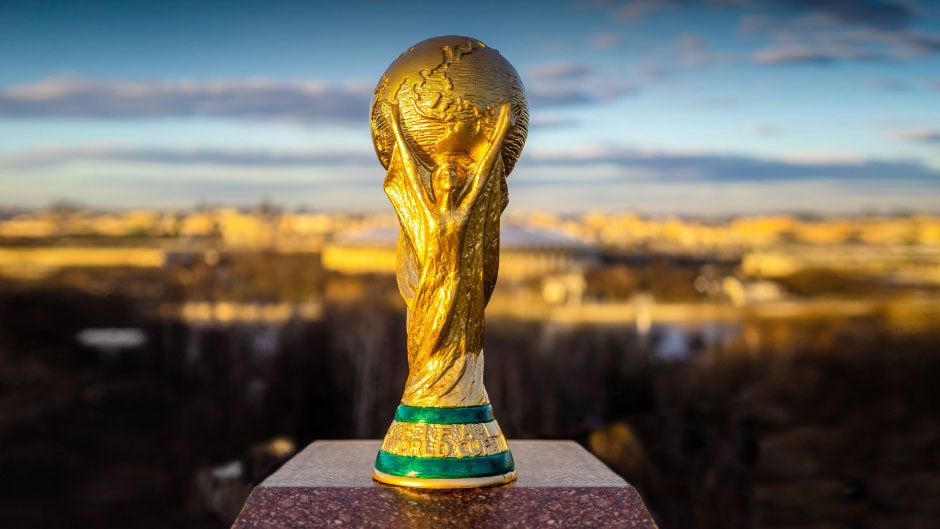
The 2026 FIFA World Cup will be the biggest, longest, and most complex tournament in football history. Expanding from 32 to 48 teams—a 50% increase—the competition will feature 104 matches across 39 days, jointly hosted by the United States, Canada, and Mexico. The format represents FIFA’s most dramatic restructuring since 1998, creating opportunities for more nations while fundamentally changing how the World Cup works.
The scale of change is staggering. Every World Cup from France 1998 through Qatar 2022 featured 64 matches. The 2026 edition will have 104 games—meaning it will take 72 matches just to reach the round of 32, eight more than an entire previous World Cup.
Between June 11 and July 19, 2026, there will be 96 games across 27 days with virtually no rest periods. On three consecutive days between June 24-27 as the group stage reaches its climax, 18 matches will be played—more than the entire 1934 World Cup’s 17 games.
Teams reaching the final will play eight matches instead of seven, while the tournament extends from 32 days to 39 days. The United States alone will host 60 matches—14 more than any single host has ever staged, and 26 more than when they hosted solo in 1994.
After FIFA initially planned 16 groups of three teams, the format was revised in March 2023 to feature 12 groups of four teams. This change addressed concerns about match-fixing, as three-team groups allowed the final two teams to engineer a result that eliminated the non-playing third team—exactly what happened at the 1982 World Cup when West Germany and Austria conspired to eliminate Algeria.
The top two teams from each group automatically advance to the knockout rounds. Additionally, the eight best third-placed teams progress, creating a round of 32 for the first time in World Cup history. This represents a fundamental shift from the perfect 16-team knockout bracket that has existed since 1998.
The round of 32 creates an asymmetrical bracket where eight group winners face the eight third-placed qualifiers, four group winners meet runners-up, and the remaining eight runners-up play each other. From there, a traditional knockout bracket proceeds through the round of 16, quarterfinals, semifinals, and final.
FIFA’s original 2017 proposal featured 16 groups of three teams with the top two advancing—creating an intuitive format with just 80 matches instead of 104. However, the three-team format presented serious problems.
The primary concern involved competitive integrity. With only two group matches per team, the final match in each group could allow two teams to manipulate the result to eliminate the third team. FIFA adopted concurrent final group games after the 1982 scandal to prevent this exact scenario.
Additionally, three-team groups meant fans might only see their team play twice before elimination. The four-team format guarantees three group matches per nation, preserving the traditional World Cup experience while accommodating the expanded field.
The World Cup draw takes place on Friday, December 5, 2025, at 12:00 PM EST (5:00 PM GMT) at the Kennedy Center in Washington, D.C. Despite the event occurring before qualification concludes, the draw will determine every team’s path—including six playoff spots that won’t be decided until March 2026.
The 48 teams will be divided into four pots of 12 based on FIFA’s November 2025 world rankings. Pot 1 consists of the three hosts (United States, Canada, Mexico) plus the top nine ranked teams. Pots 2, 3, and 4 feature the remaining teams according to rankings.
Each group contains one team from each pot. The hosts are pre-assigned to specific groups: Mexico in Group A, Canada in Group B, and the United States in Group D. This ensures they play group matches in their home countries.
Teams from the same confederation cannot be drawn into the same group, with one critical exception: Europe. With 16 UEFA teams qualifying but only 12 groups, four groups must contain two European sides. No group can have more than two UEFA teams.
This geographic distribution aims to minimize continental rematches during the group stage while creating diverse matchups. However, it also prevents some fascinating potential encounters like Brazil facing Argentina or England meeting Scotland in the opening round.
The expanded format provides more opportunities for nations from developing football regions:
UEFA (Europe): 16 teams (up from 13) CAF (Africa): 9 teams (up from 5) AFC (Asia): 8 teams (up from 4.5) CONMEBOL (South America): 6 teams (up from 4.5) CONCACAF (North/Central America): 6 teams including 3 hosts (up from 3.5) OFC (Oceania): 1 guaranteed team (first time ever)
For the first time, all six confederations have at least one guaranteed berth. Oceania’s guaranteed spot ends their streak of playoff heartbreaks, though they also have an intercontinental playoff opportunity for a second berth.
Six teams will compete in March 2026 in Mexico (Guadalajara and Monterrey) for the final two World Cup berths. The participants are already determined: DR Congo (Africa), Iraq (Asia), Bolivia (South America), New Caledonia (Oceania), Jamaica (CONCACAF), and Suriname (CONCACAF).
The format features two three-team brackets. The two highest-ranked teams (DR Congo and Iraq) receive byes directly to their bracket finals. The four remaining teams play semifinals, with winners advancing to face the seeded teams. The two bracket winners secure World Cup qualification.
Meanwhile, Europe conducts separate playoffs in March involving 16 teams competing for four spots through four bracket paths. Each path features semifinals and finals, with home advantage determined by seeding.
The 2026 World Cup runs from June 11 through July 19—39 days compared to 32 at recent tournaments. The group stage alone requires 27 days, with final group matches played simultaneously to preserve competitive integrity.
Matches will be staged across 16 cities in three countries:
United States (11 cities): Los Angeles, Seattle, San Francisco, Dallas, Houston, Kansas City, Atlanta, Philadelphia, Boston, New York/New Jersey, Miami
Mexico (3 cities): Mexico City, Guadalajara, Monterrey
Canada (2 cities): Toronto, Vancouver
The United States hosts all matches from the quarterfinals onward, including the July 19 final at MetLife Stadium in East Rutherford, New Jersey. This concentration of knockout rounds in one country simplifies logistics for teams and fans during the tournament’s crucial stages.
FIFA President Gianni Infantino, elected partly on a platform to expand the tournament, robustly defended the decision by emphasizing inclusivity and commercial opportunities. More teams mean more nations experience World Cup football, growing the game globally while generating additional revenue.
Critics argue the expansion dilutes quality and creates logistical nightmares. The European Club Association initially opposed adding 40 matches because of impact on domestic calendars and player workload. However, FIFA maintains the tournament can be managed within an acceptable timeframe.
The financial incentive is undeniable. More matches mean more broadcast revenue, sponsorship opportunities, and ticket sales. FIFA projects the expanded format will generate significantly higher profits than previous 32-team tournaments.
The eight third-place qualifiers create unusual strategic considerations. Teams might prioritize finishing as group winners to avoid third-placed opponents who could be unexpectedly strong. The asymmetrical knockout bracket makes some paths to the final potentially easier than others.
Additionally, the round of 32 means genuine contenders could be eliminated earlier than in previous formats. A powerhouse finishing third in their group might face a group winner in the round of 32, creating a marquee matchup that would traditionally occur in later rounds.
The expanded format also increases upset potential. More matches mean more opportunities for underdogs to cause chaos, while favorites face additional hurdles between themselves and the trophy.
This represents the World Cup’s largest-ever expansion. The tournament started with 13-16 teams from 1930-1950, expanded to 16 teams from 1954-1978, increased to 24 for Spain 1982, then settled at 32 from France 1998 through Qatar 2022.
The 50% increase from 32 to 48 teams dwarfs previous expansions. It fundamentally changes qualification dynamics, making it easier for nations from smaller confederations while creating more competitive balance across regions.
Takeaway: The 2026 World Cup’s revolutionary format—48 teams, 12 groups, 104 matches across 39 days—represents FIFA’s boldest restructuring in tournament history. The expanded field provides unprecedented opportunities for nations from developing football regions while creating the longest, biggest World Cup ever staged. With automatic qualification for Oceania, increased African and Asian representation, and three North American hosts, the tournament promises global inclusivity alongside commercial success. The December 5 draw in Washington, D.C. will reveal the groups and matchups, setting the stage for football’s grandest spectacle to unfold across the United States, Canada, and Mexico next summer.
Read also: https://offsidetalk.com/the-10-most-iconic-world-cup-goals/
Comments are closed.





[…] Read more: https://offsidetalk.com/2026-world-cup/ […]
[…] More: https://offsidetalk.com/2026-world-cup/ […]
[…] More: https://offsidetalk.com/2026-world-cup/ […]