Physical Address
14 Da Souq St.
GN-947-2329, Tema.
Physical Address
14 Da Souq St.
GN-947-2329, Tema.

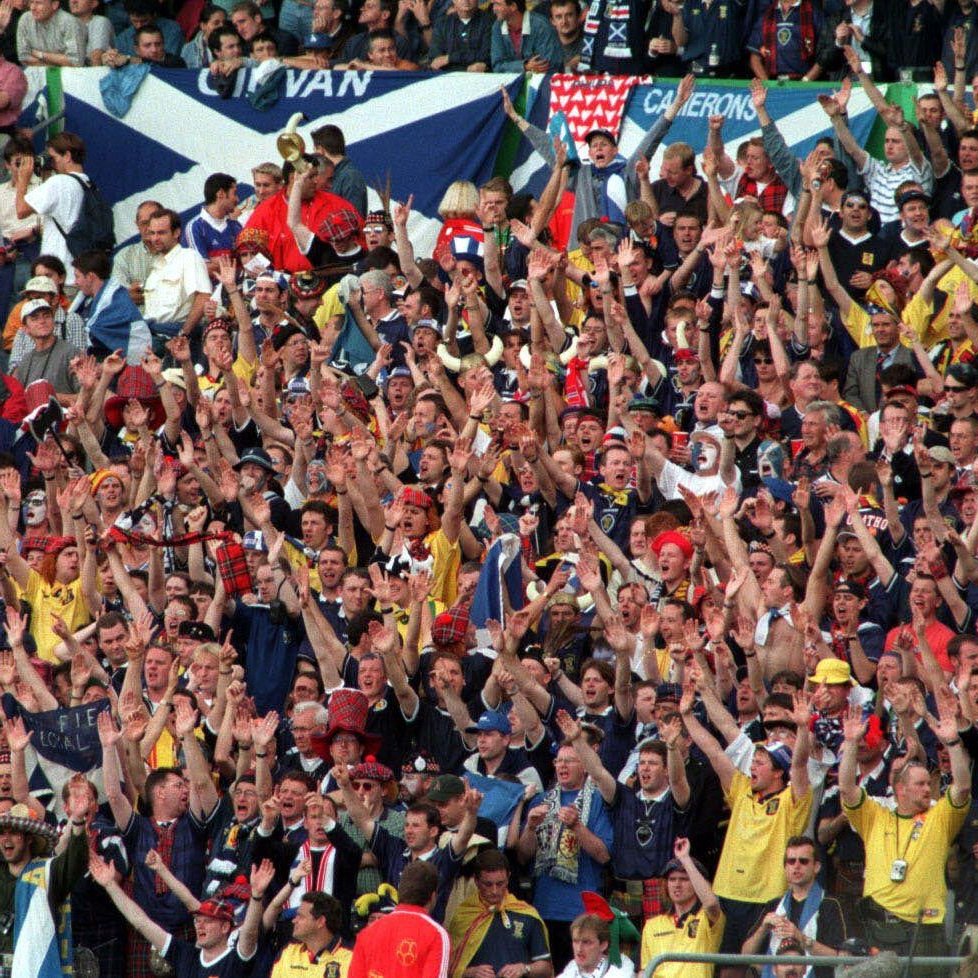

“WE’RE GOING TO THE WORLD CUP!” The roar that shook Hampden Park on Tuesday, November 18, 2025, ended 28 years of Scottish heartbreak. Scott McTominay’s masterclass powered Scotland to an unforgettable 4-2 victory over Denmark, securing direct qualification for the 2026 World Cup and sending an entire nation into euphoric celebration.
The Tartan Army can finally stop dreaming and start believing. Steve Clarke’s warriors delivered when it mattered most, producing one of the greatest victories in Scottish football history to book their ticket to North America. France 1998 feels like ancient history—this moment belongs to a new generation.
Scotland needed to win. Nothing else would do. After Saturday’s heartbreaking 3-2 defeat to Greece in Athens, the equation was simple: beat Denmark at Hampden Park or face the uncertainty of March playoffs. The pressure was suffocating, the stakes unbearable.
Clarke’s men started nervously, with Denmark’s quality evident in the opening exchanges. But this Scotland team has proven their character repeatedly under their manager, and when the moment arrived, they seized it with both hands.
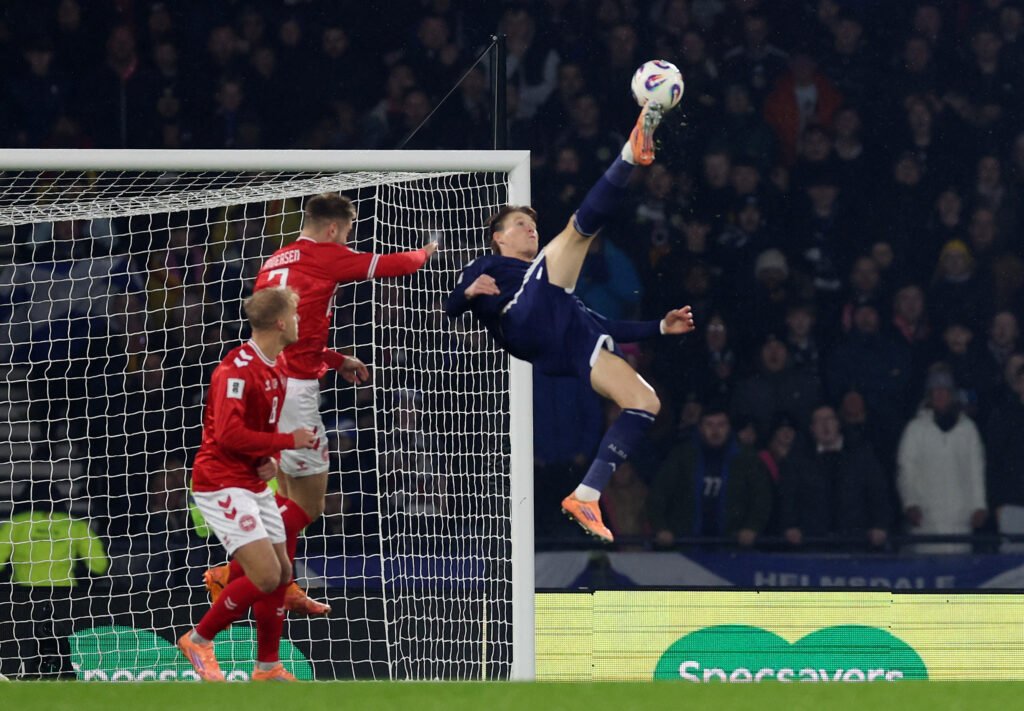
Scott McTominay opened the scoring in the first half with a trademark powerful strike that sent Hampden into delirium. The Manchester United midfielder has become Scotland’s talisman, and once again he delivered in the biggest moment. His goal settled Scottish nerves and shifted momentum decisively.
The second half became a showcase of Scottish resilience and attacking quality. Every player wore their heart on their sleeve, every tackle won sparked celebrations, every forward pass carried hope. This was Scotland at their absolute best—passionate, organized, and clinical when opportunities arose.
Scott McTominay has transformed into one of Europe’s most influential midfielders this season, and his performance against Denmark cemented his status as a Scottish legend. His energy, leadership, and quality in both boxes proved decisive in the biggest match of his international career.
The 28-year-old has scored crucial goals throughout this qualifying campaign, but none compare to the importance of his strike against Denmark. This was the goal that kept Scotland’s dream alive, the moment that will be replayed for generations.
McTominay’s celebration—pure emotion and unbridled joy—captured what this qualification means. For a player who has endured disappointments at Euro 2020 and Euro 2024 with Scotland, reaching a World Cup represents career-defining achievement.
Steve Clarke deserves immense credit for transforming Scotland from perennial underachievers into World Cup qualifiers. The 62-year-old manager has built a team that believes in themselves, plays organized football, and delivers when pressure intensifies.
His tactical approach against Denmark proved perfect. Scotland pressed intelligently, controlled midfield through McTominay and his partners, and exploited Denmark’s defensive vulnerabilities with pace and movement. This was coaching at the highest level.
Clarke’s emotional celebrations at full-time showed what this achievement means. He’s already guided Scotland to two European Championships, but reaching a World Cup eclipses everything. His legacy is now secure—the manager who ended 28 years of World Cup heartbreak.
For Denmark, this represents crushing disappointment. They arrived at Hampden needing only a draw to top Group C and qualify automatically. Instead, they must navigate March’s playoff route with no guarantees of reaching North America.
Saturday’s shocking 2-2 draw with Belarus kept Scotland’s hopes alive, and the Danes paid the ultimate price for that slip. Their quality remains undeniable, with stars like Rasmus Højlund leading an attack that scored 14 goals during qualifying.
However, Scotland’s desperation and home advantage proved too much. Denmark will rue missed opportunities and defensive lapses that allowed Scotland to score four times. The playoff path offers redemption, but automatic qualification would have been far sweeter.
Scotland’s qualifying journey featured dramatic twists. A goalless draw with Denmark in Copenhagen started the campaign, before victories over Belarus (twice) and a crucial 3-1 win over Greece in Glasgow built momentum.
Saturday’s 3-2 defeat in Athens threatened to derail everything. Greece’s comeback victory left Scotland needing to beat Denmark—no margin for error, no safety net. The pressure could have crushed lesser teams.
Instead, Clarke’s warriors showed remarkable mental strength. They regrouped, refocused, and delivered the performance of their lives when it mattered most. This team has proven repeatedly they possess the character needed to succeed on the biggest stages.
Scotland’s qualification represents more than sporting achievement—it’s national validation. The 1998 generation can finally pass the torch to a new era of Scottish football that believes anything is possible.
The impact extends beyond the national team. Young players across Scotland now have World Cup heroes to emulate, grassroots participation will surge, and belief in Scottish football’s future has been restored. This moment changes everything.
Commercially, qualification provides massive financial benefits. Revenue from ticket sales, broadcasting rights, and sponsorships will fund Scottish football development for years. The economic impact matches the emotional significance.
The 2026 World Cup, jointly hosted by the United States, Canada, and Mexico, represents the largest tournament in history with 48 teams. Scotland will join an expanded European contingent that includes Norway, Portugal, France, England, Germany, and the Netherlands.
The draw on December 5, 2025, will determine Scotland’s group and opponents. With their qualifying form, Clarke’s side won’t fear anyone. They’ve proven they can beat quality opposition when performing at their peak.
June 11 to July 19, 2026—dates now circled in every Scottish football fan’s calendar. After 28 years of disappointment, the Tartan Army will finally march on the world stage once more.
Hampden Park has witnessed countless memorable Scottish nights, but Tuesday ranks among the very greatest. The atmosphere, the drama, the emotion—everything combined to create an unforgettable evening.
The Tartan Army’s support proved crucial. Their singing never stopped, their belief never wavered, and their celebration at full-time will echo through Scottish football history. This was their night as much as the players’.
Takeaway: Scotland’s 4-2 victory over Denmark at Hampden Park ended 28 years of World Cup heartbreak, securing automatic qualification for the 2026 tournament in North America. Scott McTominay’s inspirational performance and Steve Clarke’s tactical mastery delivered one of the greatest nights in Scottish football history. The Tartan Army can finally stop dreaming and start planning their trip to the United States, Canada, and Mexico next summer. After decades of disappointment, Scotland are back on football’s biggest stage—and they earned it the hard way.