Physical Address
14 Da Souq St.
GN-947-2329, Tema.
Physical Address
14 Da Souq St.
GN-947-2329, Tema.

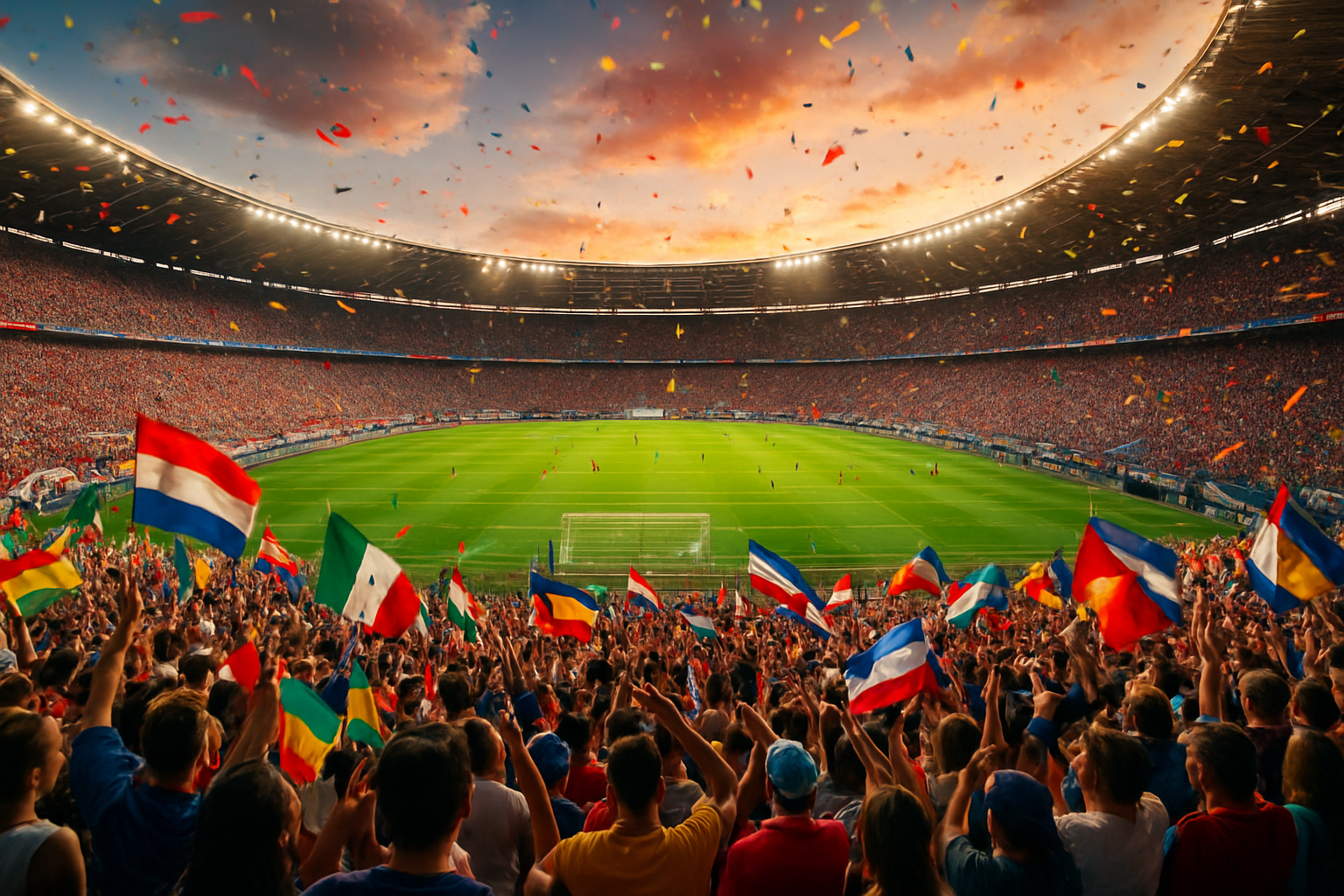
The World Cup 2026 will be the largest tournament in football history: 48 teams, three host nations, and a global stage like never before. But beyond the numbers there is a deeper truth: this could be the most unpredictable tournament the world has ever seen.
Think about it: more teams mean more playing styles, more football cultures colliding on the same pitch, and more opportunities for the unexpected to become reality. It’s not just about expanding the number of participants; it’s about transforming the very nature of the competition.
The New Tournament Format
With 48 selections in the mix, the traditional balance between established powers and emerging teams changes radically. This new structure opens the door wide to major surprises and memorable streaks of countries that previously couldn’t even get past qualifying.
Get ready for chaos, but the good kind: that kind of beautiful madness that defines the magic of football. Each group stage now becomes a minefield of possibilities. A defeat no longer means the end of the road as it once did. Teams will have more room to recover, to experiment, to dare. And when teams dare, legends are born.
The Tactical Evolution of Modern Football
Coaches no longer approach the World Cups as isolated month-long races. The tournament has become a true laboratory of innovative tactical systems: fluid formations that change with the moment of the match, hybrid fullbacks who attack as wingers, and aggressive pressing that reflects elite club football.
Teams like Japan, Morocco, and the United States are blending European technical influence with their own unique local styles, creating unpredictable tactical hybrids that can defeat traditional powers. It’s no longer enough to have good players; now you need a system that surprises, confuses, and evolves game after game.
What’s fascinating is that these innovations no longer come solely from Europe or South America. Tactical knowledge has democratized. A coach in South Korea has access to the same analytical tools as one in Spain. The advantage is no longer about who knows more, but who adapts best.
Youth vs Experience: The New Balance
The 2026 World Cup arrives during a generational transition. Icons like Messi, Modrić, and Ronaldo may no longer be there, replaced by Haaland, Mbappé, and rising stars from Europe, America (North and South), Africa and Asia who we have yet to fully meet.
The unpredictability arises precisely from this change: pure, hungry youth stepping onto the legends’ stage for the first time. Some of these players don’t carry the weight of past failures. They have no scars from painful eliminations. They only have hunger, speed, and the audacity to believe they can conquer everything.
But beware: there will also be experienced veterans seeking one last glory. The mix of reckless inexperience and calculated wisdom will create fascinating dynamics within every squad.
The Rise of the Underrated
If Qatar 2022 taught the world anything, it’s that modest teams no longer fear giants. Morocco’s run to the semifinals wasn’t a stroke of luck; it was a preview of what’s to come. It proved the gap is narrowing.
Countries like Canada, Nigeria, and South Korea are investing heavily in world-class youth academies, sports data analytics, and sophisticated tactical development. They no longer settle for merely participating; they come to compete for real.
Expect a new Cinderella story in 2026, and possibly a surprise semifinalist that no one predicted. It could be an African nation with a golden generation finally delivering on its promise. It could be an Asian team that perfected an unbeatable defensive system. Or it could be a CONCACAF nation fueled by home-field energy.
Climate, Travel, and Performance Factors
With matches spread across North America—from the scorching heat and altitude of Mexico City to the cool conditions of Vancouver, through the humidity of Miami—logistics and players’ physical recovery will play a fundamental role.
Consider this: a team could play its first match at sea level in 30-degree heat, travel 3,000 kilometers, and three days later face another opponent at 2,200 meters above sea level. That’s not just football; it’s a test of endurance, planning, and medical resources.
Teams that master travel schedules, adapt quickly to altitude changes, and rotate their squad intelligently will thrive where others falter. Squad depth will be more important than ever. It won’t be enough to have 11 stars; you’ll need 23 players ready to perform at their best.
What This Means for World Football
The 2026 World Cup will redefine international football as we know it. It’s no longer just Europe and South America’s playground. It’s football’s world in its truest and purest sense: an open competition where tactical structure, explosive youth, and cultural identity merge to create the sport’s most democratic era.
For the first time in decades, a team from any continent can go far with the right combination of talent, tactics, and a little luck. The established hierarchies are crumbling. The maps of football power are being redrawn before our eyes.
Conclusion
As the countdown to 2026 begins, one truth becomes crystal clear: the power of football is changing hands. Tactics have globalized, players are increasingly bold and fearless, and the gap between “giants” and “modest” is thinner than ever in history.
The next World Cup will not only crown a champion. It will completely rewrite the balance of power in world football. And we all have a front-row seat to witness this revolution.
Get ready. It’s going to be epic.